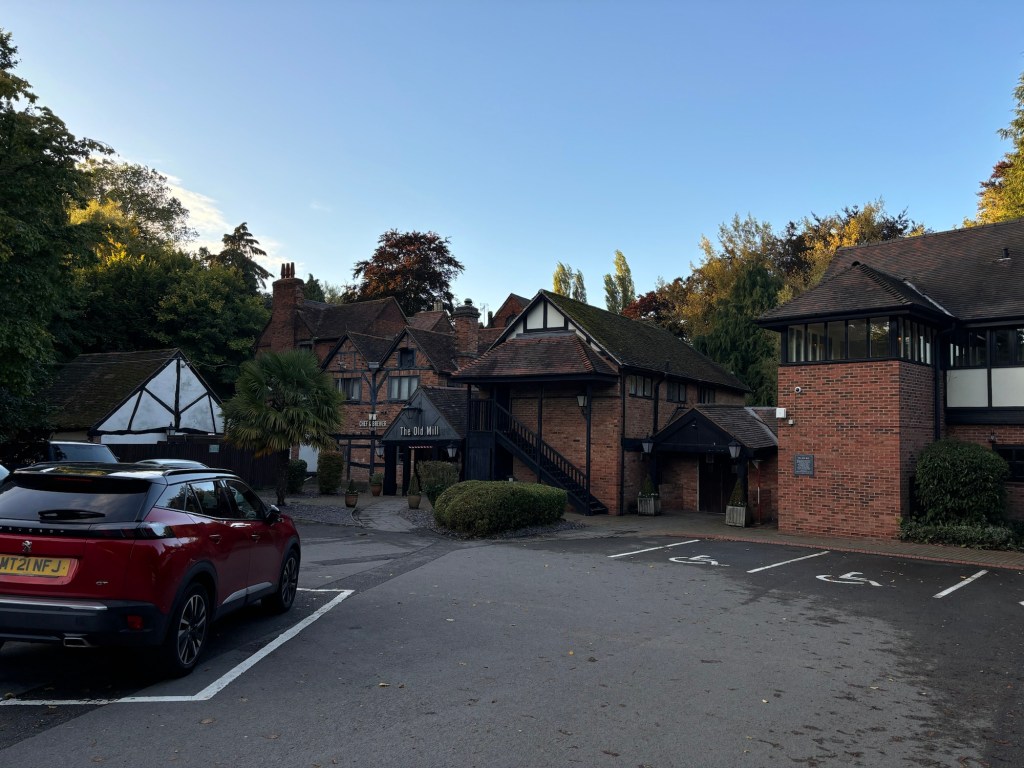
I have just got home from a dinner at the Old Mill in Baginton where I met a long term Facebook friend from Sardinia. Massimiliano Schirru and I have been friend on Facebook for over ten years and the other day I thought I would give him a call to have a chat. It turns out that his English is far better than my Italian and we talked about his Roman Fort and upcoming visit to the UK. Obviously I invited him to Coventry.
Our guest is in the enviable position of owning his own Roman Fort which took up most of the conversation. We discussed the Lunt Roman Fort and the challenges facing the heritage industry. Max is well connected in the heritage industry and I learned a lot about German and Polish Roman Forts which operate in the same way as his own and Lunt. At eight I waved him off wishing him a happy time in Britain taking in our Roman inheritance.
Coventry is blessed with cathedrals (Cathedra?) in that it has three of them. Of the first only a few ruins remain and of the third it stands but the third remains a ruin in memory of the Coventry Blitz of November 1940.
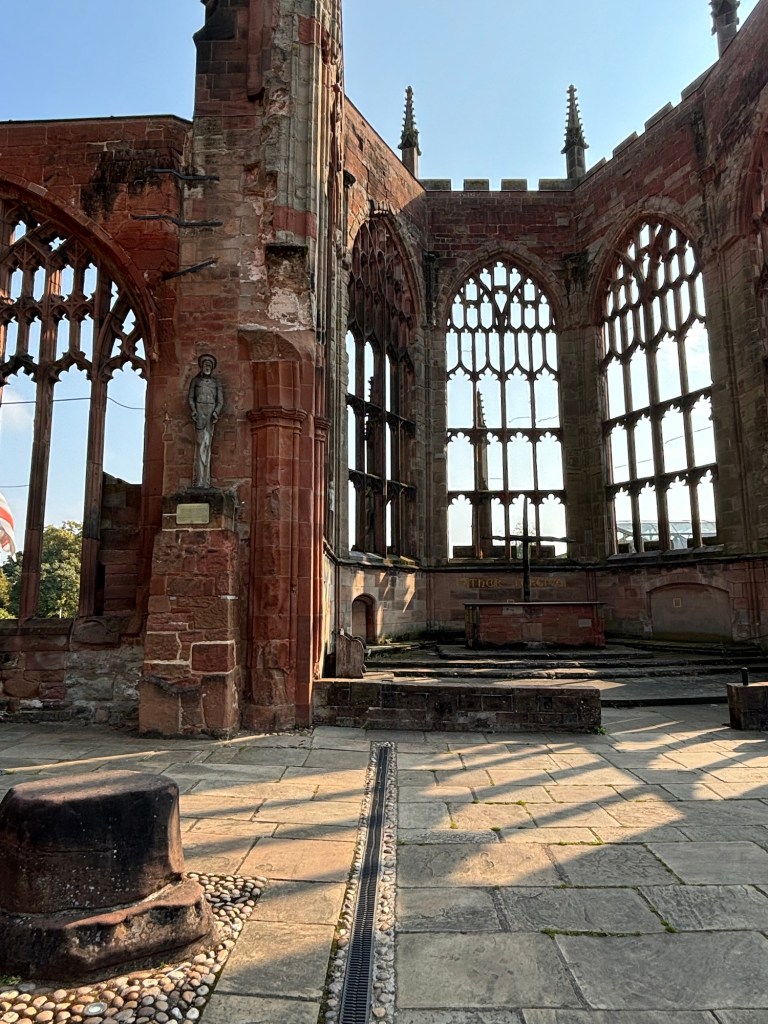
St Michaels was built in the between the 14th and 15th centuries in impressive red sandstone. The spire is the third highest in England and the choir sat on meisercords showing the famous Dance of Death. Nothing remains of these carvings beyond an account held by the city archives. It was an impressive Gothic church covered in carvings with wonderful stained glass windows. It was raised to Cathedral status in 1918 and served in that capacity till its destruction in the 1940s.
In 1940 it was destroyed during the Coventry Blitz by incendiary bombs. In an act of defiance against the Nazi hate Provest Richard Howard had the words “Father Forgive” inscribed behind the alter and used his Christmas address (Christmas Underfire), broadcast which was recorded in the bombed out ruins, to the world, to call for peace and reconciliation.
Housed in the ruins are the Coventry Blitz museum which I regard as one of the two second best museums in Coventry. A wonderful collection in an intimate space, well worth a visit.
The ruins of the Cathedral are a meditative and reflective space remaining holy ground and a national monument not to war or reprisal but to reconciliation and peace. If you’re visiting Coventry the Cathedral ruins are well worth a trip.
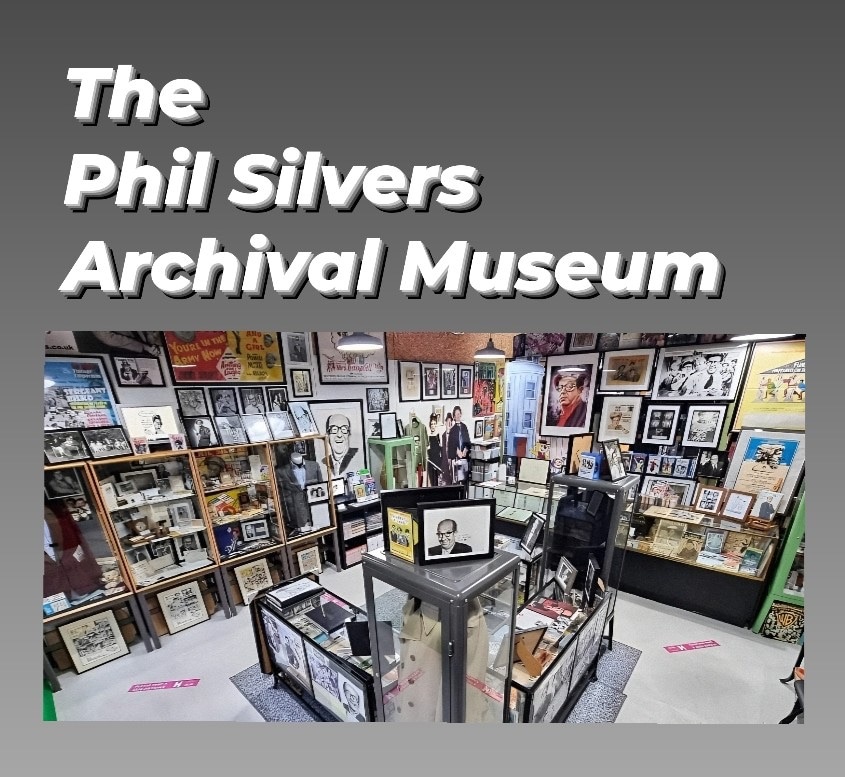
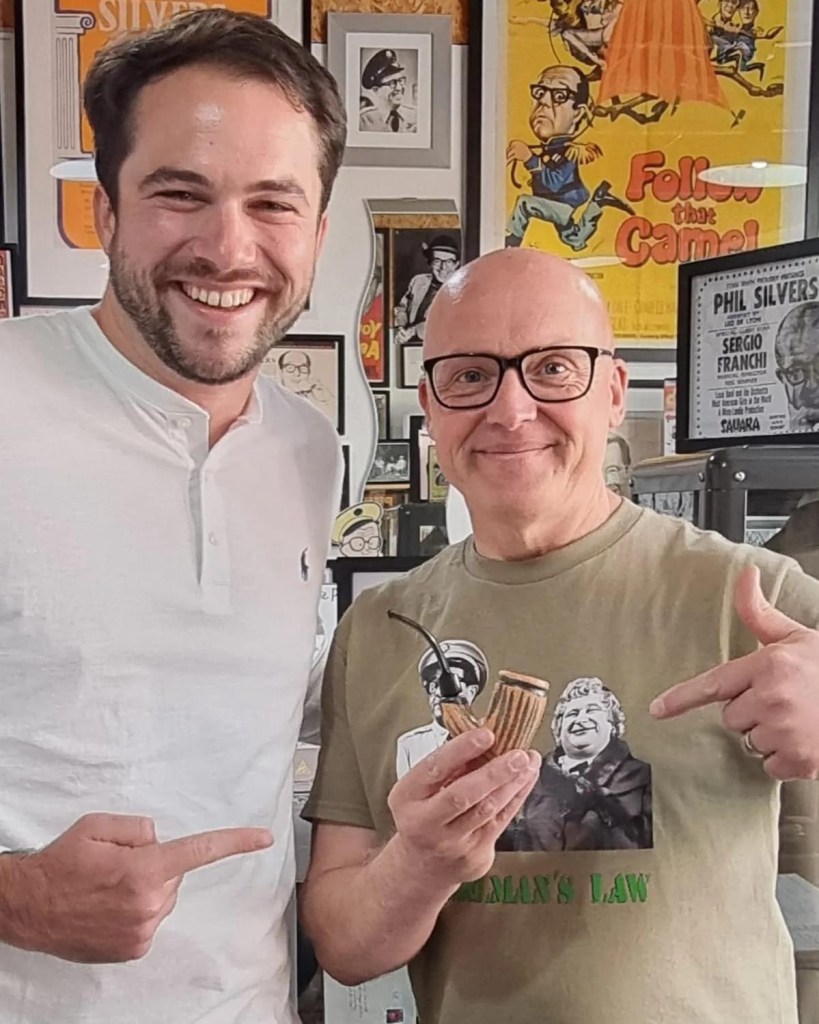
One of the best museums in Coventry is the Phil Silvers Archival Museum situated in Fargo Village. Fargo is home to a number of great shows, a fantastic barber shop and one of the smallest museums in the world. Size really has very little to do with the success of a museum. I have been to some huge, famous and well funded museums that have left me cold. The Phil Silvers museum is clearly a labour of love that rewards a visit and return visits.
If you are anything like me you grew up watching Bilko on the tv or remember Silvers from his appearance in Carry on “Follow that Camel”. He was a fantastic comic actor whose Phil Silvers show ran for a record breaking forty nine years. Modern admirers include Mark Hamill, Phil Jupiters and many others.
The collection itself is donated largely by the Silvers family and contains personal and professional objects associated with Silvers. These are lovingly displayed in a professional but not cold modern style allowing the visitor to discover them personally making visiting an intimate experience. It’s this personal, intimate and authentic experience that makes the display so effective putting it on a par with the Blitz museum and maybe even the Lunt.
Opening hours are 11am to 5pm Wednesday to Sunday.
Archaeology is the science (sic) of things. It is a science of material that is lost, thrown away or placed on purpose in an inaccessible place. From the thing and its context a narrative can be created that sheds light on the past. I have done archaeology but prefer the historical activity of creating the narrative more.
Archaeology works best when you are dealing with a materialistic society. It is easier to draw conclusions when there is a lot of material to work with such as the grave of an Anglo-Saxon king or even a Anglo-Saxon peasants burial. These contain the remains and grave goods. Societies that don’t bury their dead with grave goods are far more tricky not least if you draw the conclusion that more grave goods means that the person was richer. Consider the grave of Medieval Christian knight verses the grave of the afore mentioned peasant.
If I lost all my possessions today I would be on a par with our earliest ancestors in the Palaeolithic era. These people were nomadic hunter gatherers who followed the seasons and the herds through the landscape. They pose a significant challenge to archaeology because they were a non-materialistic throw away society. First they were non-materialistic because they were nomadic. They needed to travel light and could not be encumbered with material possessions. Second they were a throw away society in that if they needed a flint tool they could pick up a nodule of flint, knapp a tool and then after it had been used throw it away. In fact at Boxgrove we can see where they knapped a handaxe, where it was used and where it was discarded afterwards. They were a throw away society to such an extent that stone tools are regularly found and in such numbers that museums are not interested in collecting them!
As you all know I am a historian. Part of this involves going to archives and researching. Long before the pandemic I was interested in the Black Death in Coventry.
So I went to the Coventry archives to see what documents they held and discovered that others had done the work for me. The documents relating to the Black Death were well known and commented on.
One set really caught my eye. They were legal documents from 1347 detailing two cases. The first was squatters in houses rented by Eleanor of Aquitaine (yes her, she lived in Coventry) who refused to pay their rent. The second related to the Master of the Hospital (yes those Knights) which was housed in the building where the Old Grammar School is now. One day the Master had been bringing supplies into the city when he was accosted by Richard Prior of the Cathedral and certain Council members who assaulted the Master and stole his supplies.
The Bronze Age was a good time to be alive, it comes after the Neolithic Stone Age and the invention of farming. Populations increased and monuments that amaze us to this day such as Stone Henge were created.
Meanwhile in the Middle East we see the first great civilisations. On Crete we see the Minoans, mainland Greece the Mycenaean civilisation, we further east we see the Hittites, Canaanites and the powerful kingdom of Egypt. These civilisations throve in an atmosphere of peace and war. They traded together, cross pollinated each others culture and arts and regularly engaged in warfare. This is the age of the chariot, the heroic champion and the famous Trojan war.
This state of affairs continued and must have seemed like normal life. Harvests were collected, kings and queens ruled and wars rumbled on until a series of catastrophes caused what is known as the Bronze Age Collapse during the 12th century BC. First there was a super volcano explosion on the island of Santorini and Helka III on Iceland caused a volcanic winter that brought famine to Egypt and by extension to the rest of the northern hemisphere. Failing crops caused unrest and social collapse as well as greater conflict amongst the civilised states. Furthermore we see migrations of the Dorians in Greece and the infamous Sea Peoples from the ‘west’.
When I teach the Bronze Age Collapse I joke that the Sea Peoples are a little bit like ‘Cotton Eye Joe’ we don’t know where they come from and we don’t know where they go. They are mysterious and sweep in from the west and plunder the east. The eastern powers already under strain from climate catastrophe and earthquakes are destroyed. The Sea Peoples then continue to move west and potentially pick up collaborators from amongst the Greeks. The Hittites send pleading messages to the Egyptians for help but they and the Canaanites fall to the pressure. It is only the Egyptians who are able to stand against them, resist them and even defeat them. Never one to let an opportunity pass the Egyptians then may have settled the survivors in Israel as a client state to protect the Egyptians trade routes to the Red Sea and onto the Indian subcontinent.
So why did the Sea Peoples destroy Bronze Age Greece its because their descendants would be known as the Philistines of Biblical fame and archaeology of the earliest Philistines does show Greek pottery. Its fun to imagine that Golliath of Gath might have been the Great, great grandson of a Greek hero like Agamemnon.
The Roman Republic and the Carthaginian Empire were the great rivals of the ancient world. An upstart rabble of Europeans started a war with an ancient civilisation of great antiquity. In fact the fate of the world stood in the balance. If the Romans had lost Carthage would have dominated the Mediterranean and potentially Europe. It is an interesting thought of how the world would be a different place.
The Romans did not do very well. Their greatest general of the war until Skipio was Fabius who was famed for not engaging Hannibal. Hannibal terrified the Romans because he was a tactical genius who could turn the Romans great strengths against them. With the Roman armies wrecked repeatedly, their territory occupied, allies turning against them and 10% of their male population dead Rome was in trouble. Everyone was expecting Rome to come to terms but Skipio had different ideas. First he did the incredibly Roman thing of having a dinner party. He forcibly invited his patrician friends to his house, pulled down the front wall and had the party in full view of the plebs to show them that the elite were backing Rome. Then the Romans didn’t give up. They simply refused to surrender or come to terms with Carthage. They were very polite about it and treated their envoys with respect and with due regard but they used the word ‘no’.
I think this is a lesson to us all and one that I try to do in my life. Simply not giving up. I am a man who has had a lot of set backs in my life and for a long time I took it personally and would retreat and lick my wounds. Now I realise a wonderful truth, just because something has defeated you it doesn’t mean you have lost. Imagine that, how could you not live your best life if you had the power to be undefeatable?
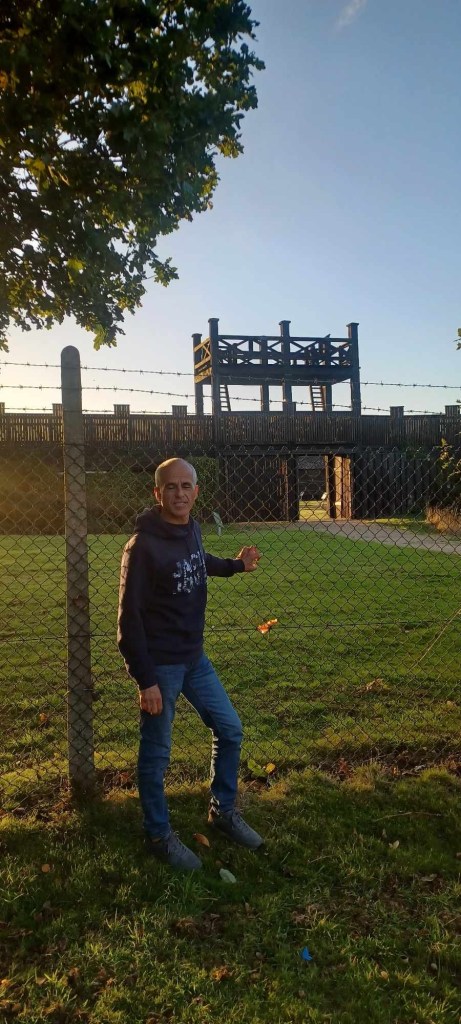
This year we choose to go back and visit a museum that I used to work at and really like. I personally think that it is the best museum in Coventry (and the West Midlands) and it is called the Lunt Roman Fort. The tour of the site took about an hour and a half and covered the main features of the site in great detail. I honestly could not fault it and that is one of the main joys of a historian. Rich and George did an excellent job and were clearly very happy and confident in their Roman costumes and personalities.
The Lunt is the worlds only partially reconstructed Roman Fort in situ. The reconstructions date from the 1970s and are now over fifty years old meaning the reconstruction has been there longer than the Roman occupation. Lunt is a mysterious site because first it is atypical and second it does not appear in the literature. The site is not constructed like a typical Roman Fort in a playing card shape. This one has wiggly walls and a Gyrus. The Gyrus is a fascinating structure that seems to be a horse training ring although that is debated. The site also has reconstructions of a gateway and an granary building. The granary contains a small but well stocked museum including finds from the site.
First I have used capitals for both History and Film. This is to mark them out as proper nouns. Can we learn or do History in Film? I think the question is far more complicated than it looks and that the conclusion will surprise you.
First I think that Film is an excellent medium for History. I am firmly in the camp that History is an Art and not a Science. Film is an artistic medium so manifesting an art in an artist medium poses fewer problems than presenting an art in a scientific medium. History as Science is like wearing a stiff collar in Church, uncomfortable, unnecessary and for someone else. That being said all art must guard against being a tool of the propagandist. Good art is didactic and welcomes comment and criticism, the propagandist brooks no contradiction.
Second, and I have experience of this, a Historian in a movie theatre must shut up and let other people enjoy the film when non-professionals are present. The problem with film is that the story must take priority over the facts and ‘authenticity’. Film is not History in the same way an essay or a journal article is History where facts and details are important. The story is the most important element and swords, bluebells or rabbits are much less important. Now where that story reflects the historical reality of events we can learn history. A story about the last hours in Hitlers bunker that draws on diaries and interviews can be a useful history compared to a relentlessly authentic medieval survey drama about the Peasants revolt putting modern Marxist thought into the mouths of 14th century peasants. If a film does not accord to the best possible knowledge of the story then we move from history into fantasy and for some narratives, and valuable stories, fantasy is the best medium.
Finally Film is a historical product and one which is part of our inheritance as citizens of a democracy. These are stories we choose to validate by using our time to watch and our money to buy. As active citizens in our democracy we must know where we have come from to understand why the present is as it is and for many film is how we do that. The importance lies in us choosing to watch and spend money on this because it becomes our product and not a propaganda fostered on us by the elite. Such an elite history you can find in museums and art galleries across Britain and see just how attractive they are to the public.
Ultimately all history is for the public and film is probably the most democratic artistic medium available in the current age. The impact of historical film can be seen particularly well in Scotland where the SNP gained a boost from the Braveheart (yes I know.) film and Scottish democracy has been supercharged. The SNP are enjoying the trade wind of popular nationalism not stirring it up which separates them from other nationalist movements. Talking of Braveheart this is an example of a fantasy film with a glancing relationship with history. Its a film which I have never watched but also one that if I did I would be very quiet and let the non-professionals just enjoy it. Do these films have value? Yes I think that they do and if they perpetuate myths, as long as they are benign myths, then I see no problem. If they are malign, the film should be cast out, but myths can be dealt with in articles and journals by professionals. Scientific and professional history needs to stay in the professional realm and let art flourish in the artistic realm and by accepting the opportunities and limitations of film we can create the conditions for valuable history that engages the active citizen to make our world a better place.
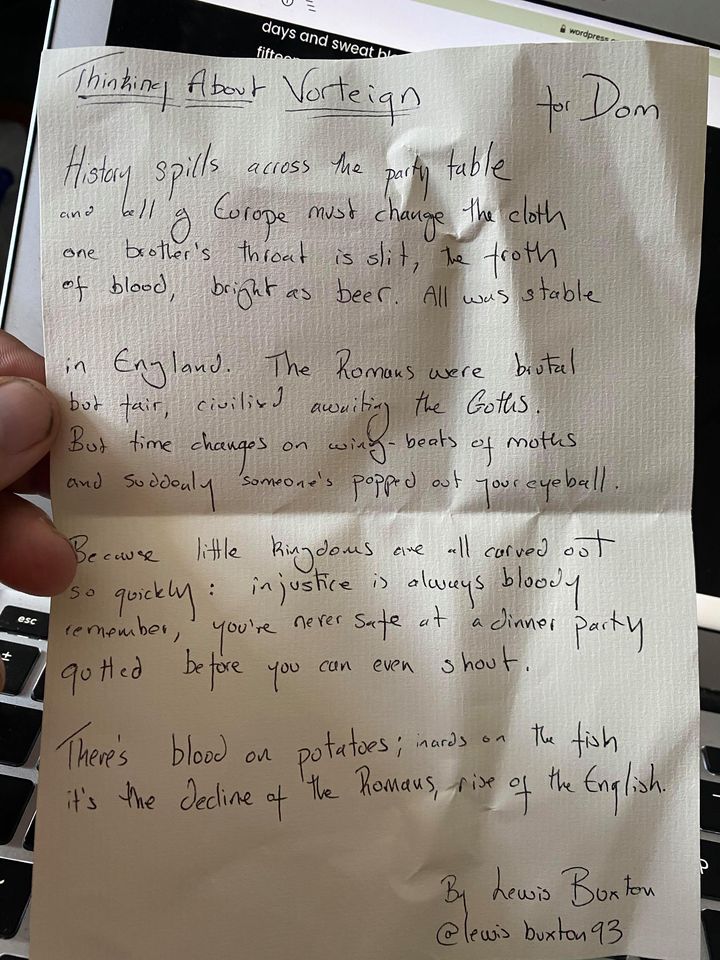
Today I went to Fargo Village to buy some books for some work I am going to start. When I got there my good friend was busy trying to buy petrol which during the current crisis (not crisis) is difficult. Whilst enjoying a cup of tea and a cake I saw this poetry van. The Poetry Van serves poems whilst you wait. I waited and waited and eventually I was “served”. The poet who wrote for me wrote a poem about the blinding of Vortigern by the Jutes after he betrayed them.
On my other post I have discussed the poem itself and have concluded that it is a very fine poem, written in fifteen minutes by a man who would normally spend days and blood over a single line. In my Jack Russell post I have not discussed the historical elements.
I think that Lewis is a very good man who dealt with an autistic obsessive very well indeed. The first thing he dealt with this morning was me telling him about the Frisken Massacre, the withdrawal of the Roman Legions from Britannia, the civil war between Vortigern and Ambrosias and then Vortigern getting his eyes popped out at a dinner party in vengeance for his betrayal of the Jute leaders.
He stressed that it would not be an authentic account and it would be a poetic representation of my interested in the topic. He asked me my feelings and I am sorry to say that I couldn’t think of any, as I say I am autistic and rarely feel anything. but I am good with poetic licence and a critic of stagnant “authenticity”. Frankly it is a delightful poem that with all the energy of the metaphysical poets tells the story of the coming of the English. I do not particularly care that Lewis has confused Britannia with England, brought in the Goths or has anachronistically used that name or put potatoes in a 5th century feast. I know that when I post this in some groups there will be ‘rivit counters’ who will not be able to get over such details. To such people please retweet the link with your criticism, that will be very useful.
The point that I like about the Coming of the English is that we see that history turns on the decisions of individuals and their actions good or bad. We see a peace treaty destroyed by one unnamed person spilling a drink and not saying sorry which leads to the massacre of the Friskens. We see the Jutish princes return to Jutland and then have to leave to make money and enter the service of the Tyrant Vortigern and we see Vortigern growing concerned about the rise of the Jutes and lashing out only to be betrayed and blinded in revenge.








 Historytalker