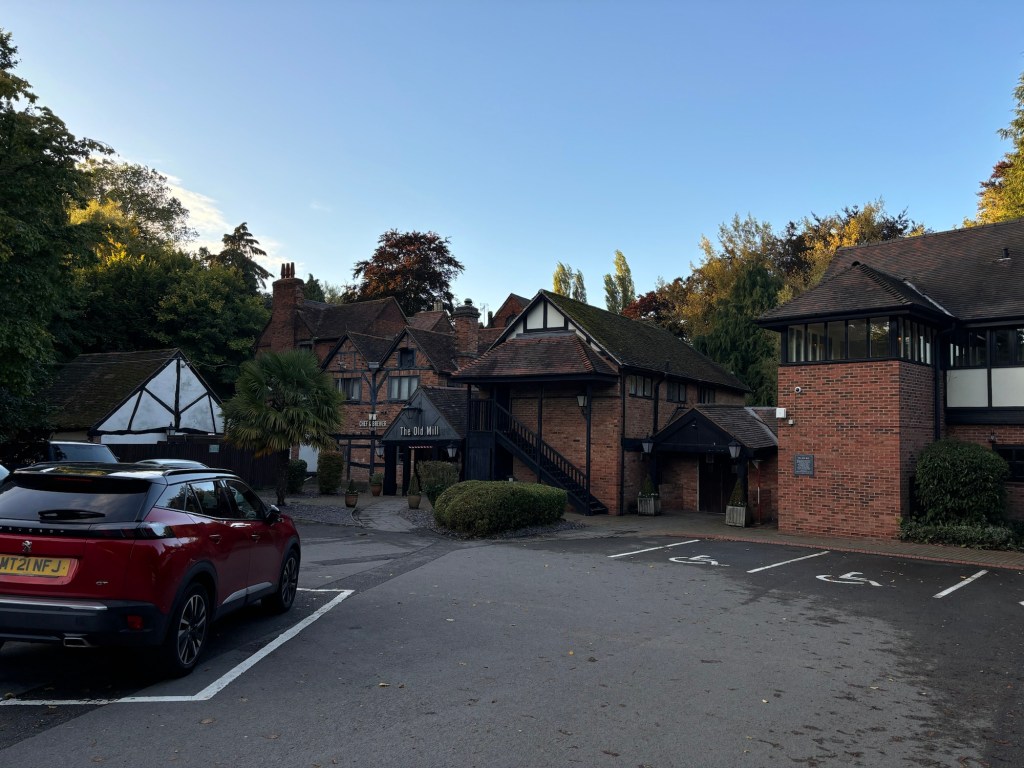
I have just got home from a dinner at the Old Mill in Baginton where I met a long term Facebook friend from Sardinia. Massimiliano Schirru and I have been friend on Facebook for over ten years and the other day I thought I would give him a call to have a chat. It turns out that his English is far better than my Italian and we talked about his Roman Fort and upcoming visit to the UK. Obviously I invited him to Coventry.
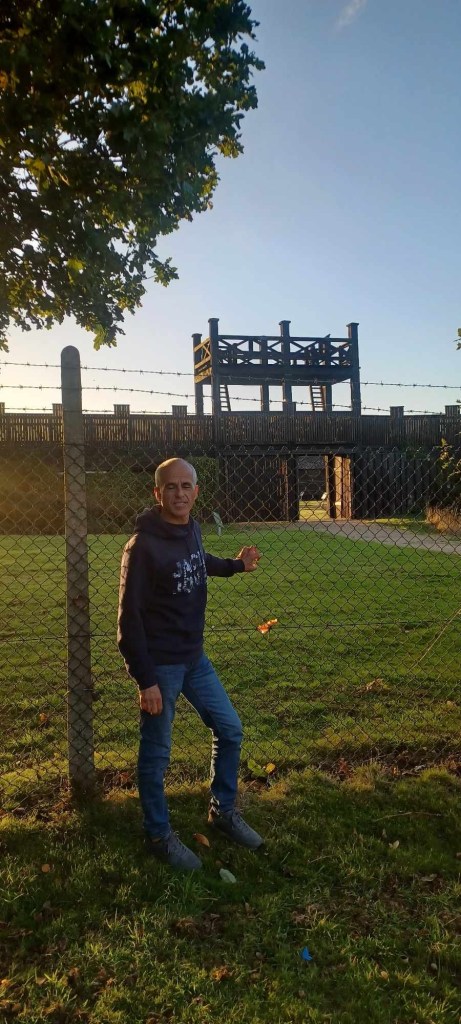
Our guest is in the enviable position of owning his own Roman Fort which took up most of the conversation. We discussed the Lunt Roman Fort and the challenges facing the heritage industry. Max is well connected in the heritage industry and I learned a lot about German and Polish Roman Forts which operate in the same way as his own and Lunt. At eight I waved him off wishing him a happy time in Britain taking in our Roman inheritance.
This post came to me when I was thinking about films for a previous post. I came to the conclusion that yes we can ‘do history’ by watching films and this leads to my next question, can we ‘do history’ by reading historical novels?
First a little bit about me. I am dyslexic and I find reading difficult. you might think I have picked the wrong vocation, a historian, because that involves a lot of reading. Well you are right but I did not choose my vocation, its the only thing that I can do. To escape the limitations posed by my disability I have to be humble and wear funny coloured glasses, read very slowly and use audio-books where ever possible. I also use a variety of books which include historical fantasy books.
One of the best authors that I have ever come across is Harry Sidebottom. I have just finished his new book, <a href="http://<a target="_blank" href="https://www.amazon.co.uk/gp/product/B08GSSS2J3/ref=as_li_tl?ie=UTF8&camp=1634&creative=6738&creativeASIN=B08GSSS2J3&linkCode=as2&tag=historytalk00-21&linkId=a63d3af91145a0e7ef172cb6ed0a3487">The Burning Road: The scorching new historical thriller from the Sunday Times bestsellerThe Burning Road, which was brilliant. Mr Sidebottom is an academic and a teacher so alongside being an author completes a disgusting holy trinity of over achievement. I first came across his work in <a rel="noreferrer noopener" href="http://<iframe style="width:120px;height:240px;" marginwidth="0" marginheight="0" scrolling="no" frameborder="0" src="//ws-eu.amazon-adsystem.com/widgets/q?ServiceVersion=20070822&OneJS=1&Operation=GetAdHtml&MarketPlace=GB&source=ac&ref=qf_sp_asin_til&ad_type=product_link&tracking_id=historytalk00-21&marketplace=amazon®ion=GB&placement=B002RI9JNM&asins=B002RI9JNM&linkId=2910c49317ff956ece4f823102e81966&show_border=false&link_opens_in_new_window=false&price_color=333333&title_color=0066c0&bg_color=ffffff"> Warrior of Rome which I found to be an incredibly haunting novel. I have come to the conclusion that Mr Sidebottoms success lies in his incredibly good writing skills. These allow him to paint such vivid pictures of the ancient world, pictures of semen stained statues, soldiers in the tavern and the scene of the day after the siege failed. Somehow the wordsmith manages to allow you to look into this world and that is the value in my mind.
The power and value of good historical fantasy is that the material is as ‘true’ as a text book but at the same time over painted by false characters who open the doors and allow our imagination to gain access to those facts. For me this has been helpful. As a guide at the Lunt Roman Fort in Coventry I had to create an imaginary image of the fort that I could communicate to visitors and Warrior of Rome certainly had a role in that.
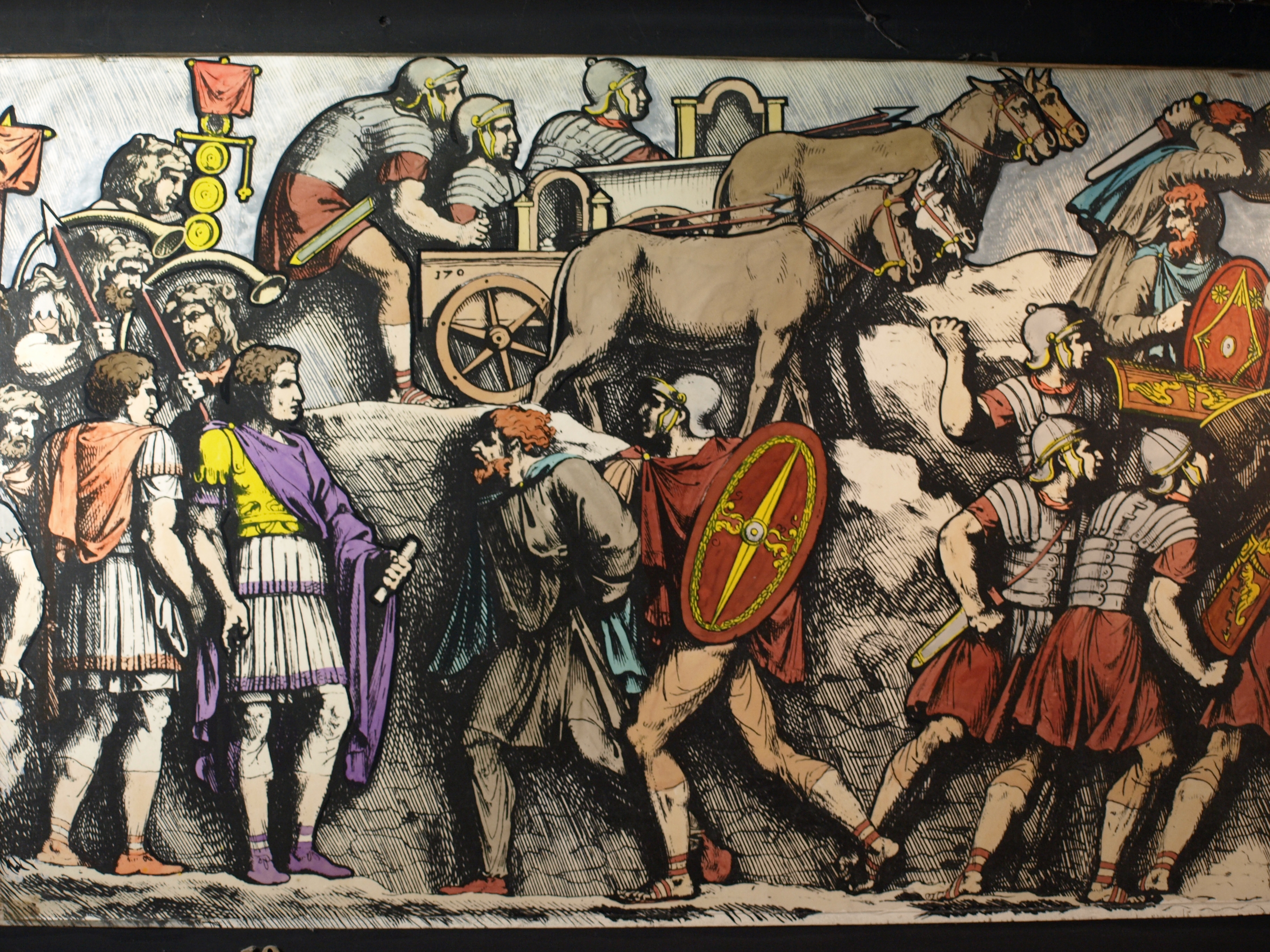
In this image we see the Roman Army engaged in a battle (to the left). As the heavy infantry engage the Dacians the Emperor “interviews” a prisoner held before him by an auxiliary soldier. The legion was for the battle winning action whilst the role of the auxiliary was to enable them to win. Behind the emperor are the signum the standard and the cultic musicians.
What is especially exciting is the mounted catapulta in the background. Mounted on a cart this Scorpion is a dart throwing artillery weapon that could be quickly and easily moved over the battlefield supporting the role of the infantry.
The success of the Roman Army lies not only in the fantastic equipment and training of the legion but in the backup it received from the rest of the army. In modern terms this can best be described as the “warm fuzzy” feeling that the British Army tries to inspire. The idea that the individual soldier is not alone and everyone else has his back. Consider this, if you had this feeling how could you not conquer the world?
I have a talk coming up in March that quite frankly is scaring me to death. I have to give a series of forty minute talks to some ….. teenagers! (Dan Dan Daaa!)
So yes I am brushing up on my Classical knowledge. As a young and foolish man I really hated the Classics in general and Philosophy in particular but now at the age of 30 (version 9) I have come to love them. My other interests include CS Lewis. I have read everything that Lewis wrote and now with my classical knowledge increasing I can understand him a deeper level. I never realised how much stoicism was in Mere Christianity or the Screwtape Letters!
I have just finished reading A Classical Education which proved to be a good read, full of interesting facts and enlightening.





 Historytalker