Categories
Uncategorized

Publish or Die…

Daily writing prompt
What’s the best piece of advice you’ve ever received?

Over the years I have been given lots of good advice by people who do not take it themselves. My father in particular was obsessed that I would run over the cord with the lawn mower but I never did, he however, murdered at least three hedgestrimmers by cutting energetically through the cord. Never take advice from someone who does not follow it themselves.

During my time in the TA I met some very remarkable men and women whose experience serving their country contrasted with my own four years of service. But one day after a difficult run a very experienced soldier told me not to worry about other people but to focus on myself and my performance. I think that this is excellent advice to follow. Don’t look around at the people who are better or worse than you, rather focus on being the best person who you can be.

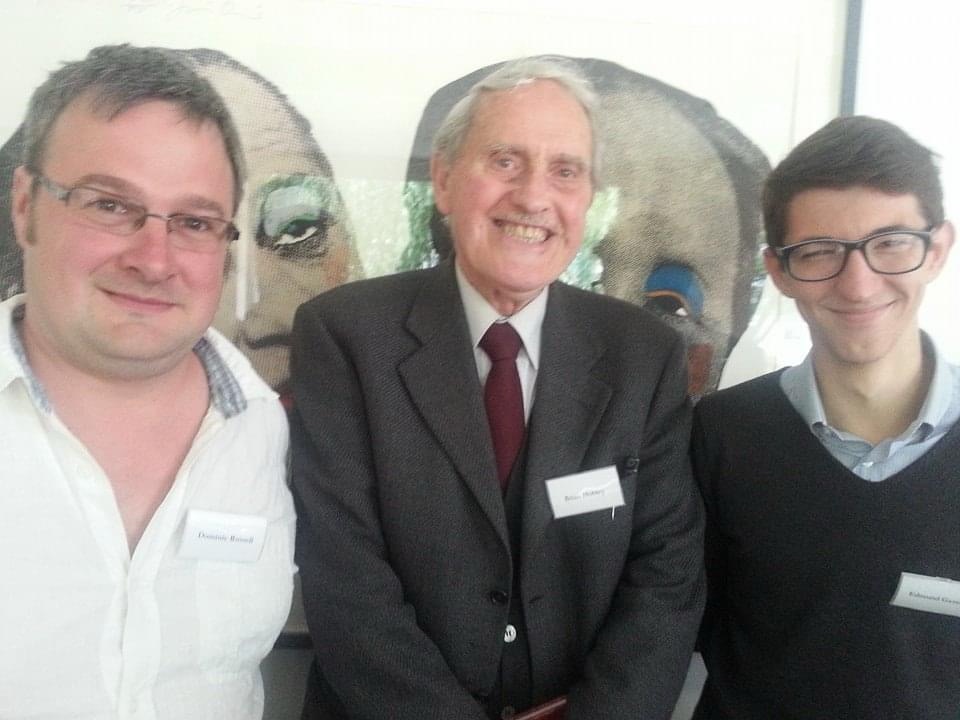
I once met a significant academic in my field. To be honest I thought that he was dead but at a conference I saw his name on a name badge and was amazed to meet one of my heroes. If you meet a hero do not hold back ask for an autograph, a photo, a chat or advice because the worst that could happen is that they say no and nobody dies from being told no. This guy was bemused but friendly and gave me some excellent advice. He told me to publish, publish, publish because when you stop you die.
Last I asked my grandfather on his death bed for a piece of advice but he was too far gone and did not respond. My last piece of advice for you is never wait too long.

Categories
Uncategorized

Please just let me read…

Daily writing prompt
What could you do more of?

As a historian I read a lot to try to keep up with my topics but it is never enough and there are always fun distractions. My main topic is the study of History as opposed to history. For the uninitiated that means I study not what is said but how it is said and what the underlying subtext is.

This obviously takes a lot of concentration and is often interrupted by the cat who regularly wants to be fed or loved. The cat is called Zach.

I am also a husband and father and these take up a lot of time. In fact I have got to the point of writing at 4am when they are not awake. The cat is though and if I am awake and doing something he feels I can do something useful like feed him, let him in or let him out and sometimes watch him eat. He loves that. He wants me to stand and watch him eat his food.

I also have a job which starts at seven and finishes at four. I drive to a school, deliver a workshop and then drive home again. I resent these nine hours where I can not write or read but I do get two hours of thinking time whilst driving. Unfortunately I spend this time thinking about how I should be reading.

I should be reading. I should be keeping up but there are too many distractions. Life gets in the way and despite all that being a husband, father, pet owner and a workshop leader is not a bad way to waste time that should be spent reading.

Categories
Uncategorized

The Abolition of Slavery, 1833

Daily writing prompt
What aspects of your cultural heritage are you most proud of or interested in?

Great Britain has a chequered history ranging from the blackest evil to the best and I think that best was the Abolition of Slavery and then the creation of the West Africa Squadron to rescue captured Africans.

The clip above is from the film Amistad (1997) which is a film I can not watch without crying. It is heart breaking but the end of the film shows the West Africa Squadron attacking and destroying a slave fortress which I would argue is the correct and best use of weapons.

Furthermore I have skin in this game because Thomas Clarkson the abolitionist is a relative.

Categories
Uncategorized

Collecting Coventry, an Exhibition

Collecting is something that humans like to do. From the Roman Empire we learn that the Emperors collected dinosaur bones, spider webs and books. I myself have an unnaturally large collection of Warhammer 40K models and from this exhibition we learn that the City of Coventry has been collecting for centuries. The cities collection is spread out over the institutions of the city including the Guild Hall and the Council House but is largely concentrated in the Museum.

Open photo

On Wednesday last I attended the Collecting Coventry Exhibition at the Herbert Art Gallery and Museum in Coventry. The Herbert is a dear place to me and I regard it as one of the best museums in Coventry. The founding principal of the museum was that it should house the kinds of work that people would want to see and I don’t think that this exhibition disappoints. With the range of exhibits there is something for everyone. Of particular interest to myself was the Ogden stone found in Coventry. A very mysterious object to be found so far from Scotland and Ireland where they are far more common.

Open photo

The exhibition covers two rooms and is fully accessible with a lift and stairs. It runs till the end of the year and is free to access.

Categories
Uncategorized

Heritage Open Day, Lunt Roman Fort

This year we choose to go back and visit a museum that I used to work at and really like. I personally think that it is the best museum in Coventry (and the West Midlands) and it is called the Lunt Roman Fort. The tour of the site took about an hour and a half and covered the main features of the site in great detail. I honestly could not fault it and that is one of the main joys of a historian. Rich and George did an excellent job and were clearly very happy and confident in their Roman costumes and personalities.

The Lunt is the worlds only partially reconstructed Roman Fort in situ. The reconstructions date from the 1970s and are now over fifty years old meaning the reconstruction has been there longer than the Roman occupation. Lunt is a mysterious site because first it is atypical and second it does not appear in the literature. The site is not constructed like a typical Roman Fort in a playing card shape. This one has wiggly walls and a Gyrus. The Gyrus is a fascinating structure that seems to be a horse training ring although that is debated. The site also has reconstructions of a gateway and an granary building. The granary contains a small but well stocked museum including finds from the site.

Open photo

Categories
Uncategorized

Greek Philosophers

When I teach Greeks in schools I love to talk about the Greek philosophers and their antics. It seems to me that philosophy was a lot more fun back then. Indeed according to St Paul it is all the Athenians ever did.

Diogenes the Cynic was a fascinating character who was not intimidated by wealth power or status. When he was interrupted sunbathing by Alexander the Great he told the conqueror to get out of his sun. He irritated the Athenians by carrying a lit lantern by day looking for an honest man and not finding one and when he was sold into slavery told the auctioneer that the only work he was good for was being a master.

Pythagorous was a great mathematical genius and boxer. He even competed in the Olympic Games where he won which could have made his fortune. He maintained a school on Sicily where his students regarded his teaching as that of the gods themselves. This teaching extended to how his students should dress, act and even go to the toilet. He seems to have venerated beans and died when he was pursued by an angry mob into a bean field which he refused to cross preferring to be beaten to death than squash a bean.

Socrates is regarded as the founder of philosophy. Before his innovation in thinking philosophers were concerned with the nature of reality. Socrates opened up thinking about living and the good life. Like Diogenes he irritated the people of Athens by showing that many people did not have good reasons for their ideas. He himself was irritated by the prophetess at Delphi who proclaimed him to be the wisest man in Greece. He sought for someone wiser than himself and was horrified to find nobody. This and his criticism of wealth and power as goods in themselves made him enemies and in 399BC he was tried for atheism and corrupting youth, found guilty and condemned to death by poisonous drink. Despite having amply opportunity to escape into exile he accepted the courts judgment and died.